Keep devices that still serve a purpose
Keep analog phones and fax endpoints in service when project validation confirms they fit the new call design.
Products
Every OpenVox product line, from PBX systems to gateways and accessories.
View all 184 productsIPPBX and phones
Cards and accessories
Connect my sites
Modernize what I have
Keep established analog phones, fax machines, and other endpoints in service while the voice network migrates to SIP. Migrate endpoint groups in stages according to device needs, location, cabling, and operational schedule.
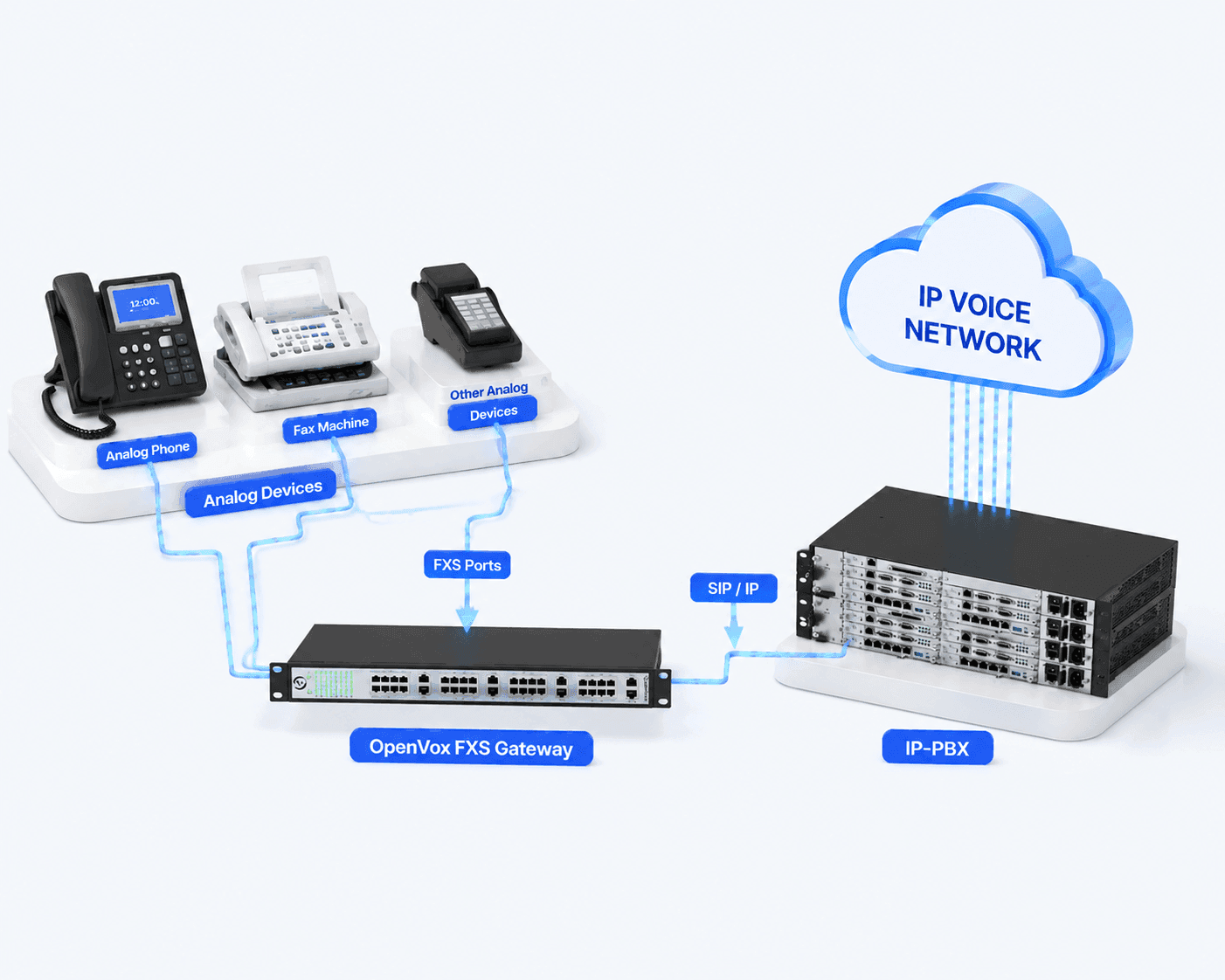
Analog phones, fax machines and other established devices can still perform a necessary task even as the voice core migrates to SIP.
Replacing every device at once can increase equipment costs, rewiring work and the cutover window. FXS access separates the timing of endpoint replacement from the decision to modernize the network around it.
Keep analog phones and fax endpoints in service when project validation confirms they fit the new call design.
Register analog endpoints through an OpenVox gateway while the upstream call system runs on SIP or IP-PBX.
Organize cutover work by building, floor, department or operational priority.
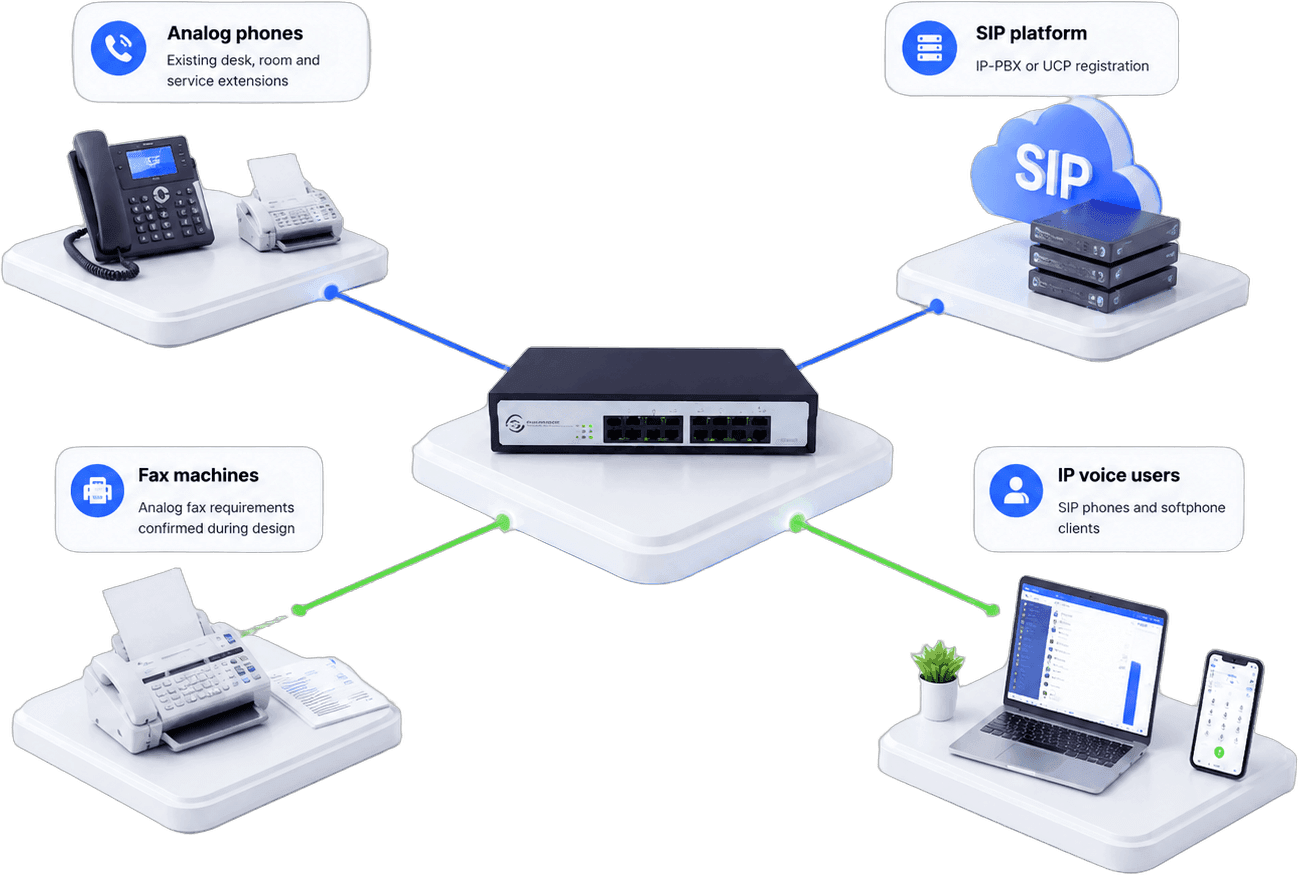
Existing analog devices connect to the FXS ports. The gateway then presents these extensions to the SIP or IP-PBX system, allowing analog and IP users to participate in the same call environment.
Start with the device type, quantity, cabling, and location. These parameters determine whether the site needs a small gateway, a building-level design, or a phased high-density deployment.
Connect a defined set of analog phones or fax machines without redesigning the entire site.
Confirm the endpoint type, number of ports, wiring location, SIP registration, and upstream IP-PBX.
Select enough capacity for the current group and credible short-term additions.
Analog devices are spread across a building and require a shared connection to the IP voice platform.
Map endpoint clusters, equipment rooms, and existing analog wiring before choosing capacity.
Decide whether a larger gateway or multiple local gateway points are a better fit for the site.
A large number of established endpoints must remain operational while the platform is modernized.
Plan gateway capacity, equipment layout, validation, and migration batches before changing endpoint groups.
Group migration work by building, floor, department, or operational priority.
A controlled migration inventories the analog estate, places the required FXS capacity, validates call behavior, then moves endpoint groups according to operational timing.
Record device types, quantities, locations, wiring groups, and current call behavior.
Place FXS gateway capacity between the endpoint estate and SIP.
Confirm registration, signaling, inbound and outbound calls, fax requirements, and upstream platform suitability.
Replace endpoints later when operational and financial timing allows.
OpenVox FXS gateway families connect analog phones and other analog devices to SIP/IP-PBX systems, covering small endpoint groups through high-density access requirements.
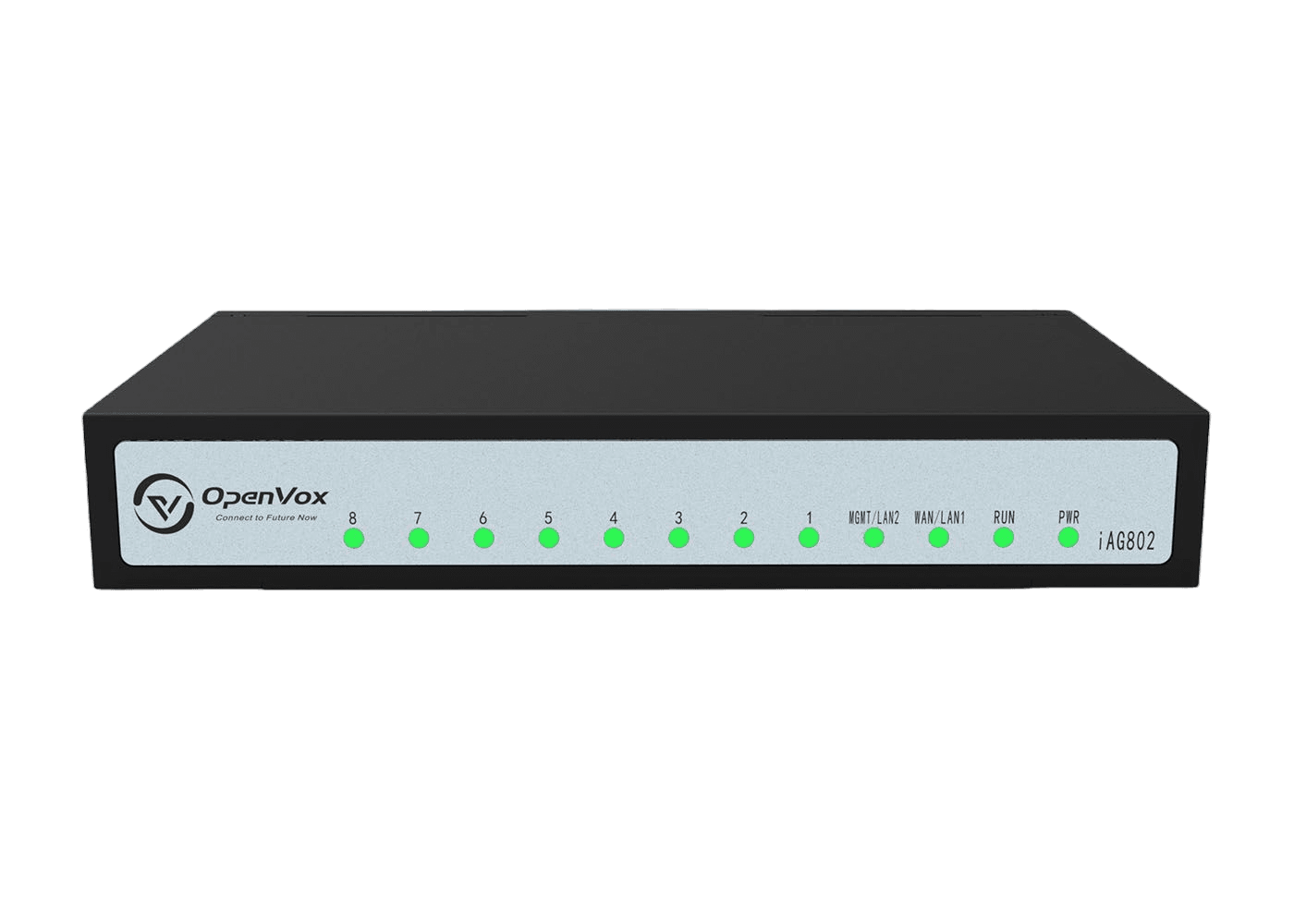
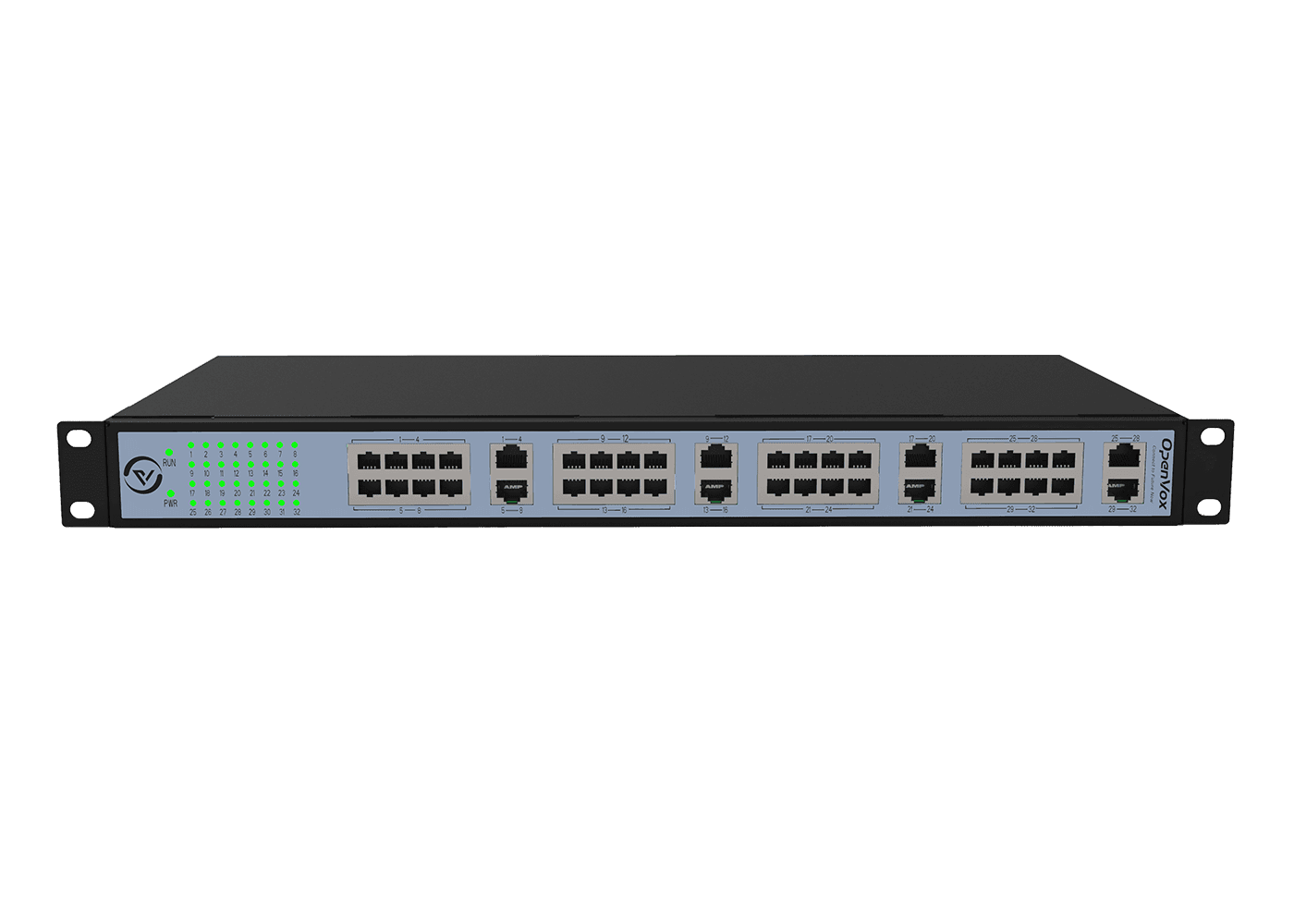
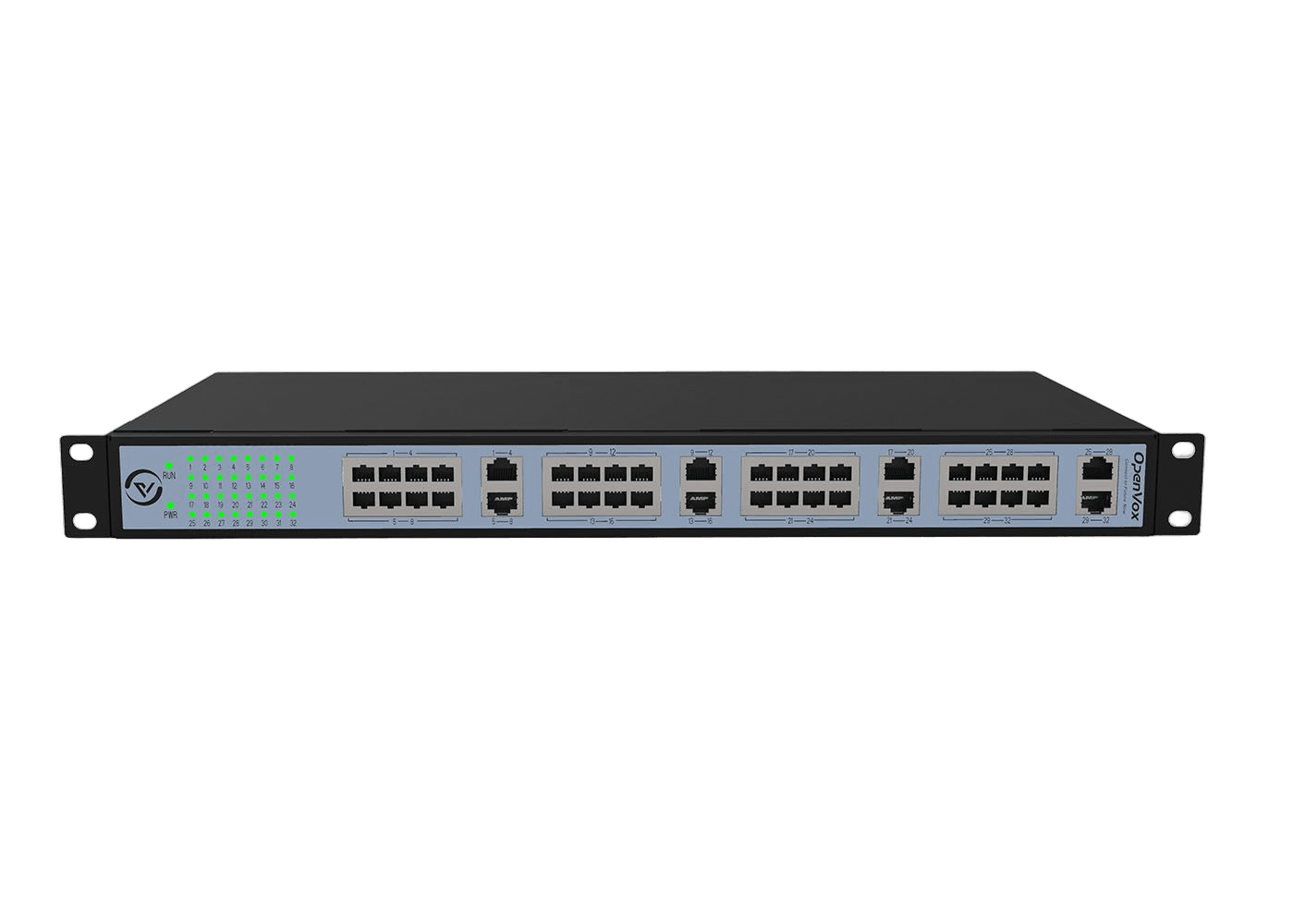
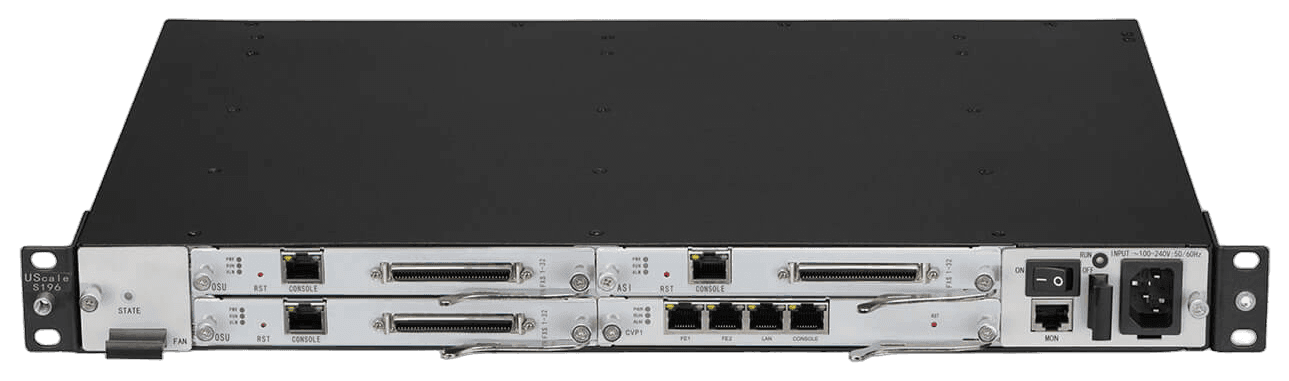
OpenVox product documentation covers FXS devices and modules for different analog endpoint densities.
OpenVox product documentation covers FXS devices and modules for different analog endpoint densities.
UCP documentation includes analog phones, fax machines, SIP phones, and soft endpoints in documented deployments.
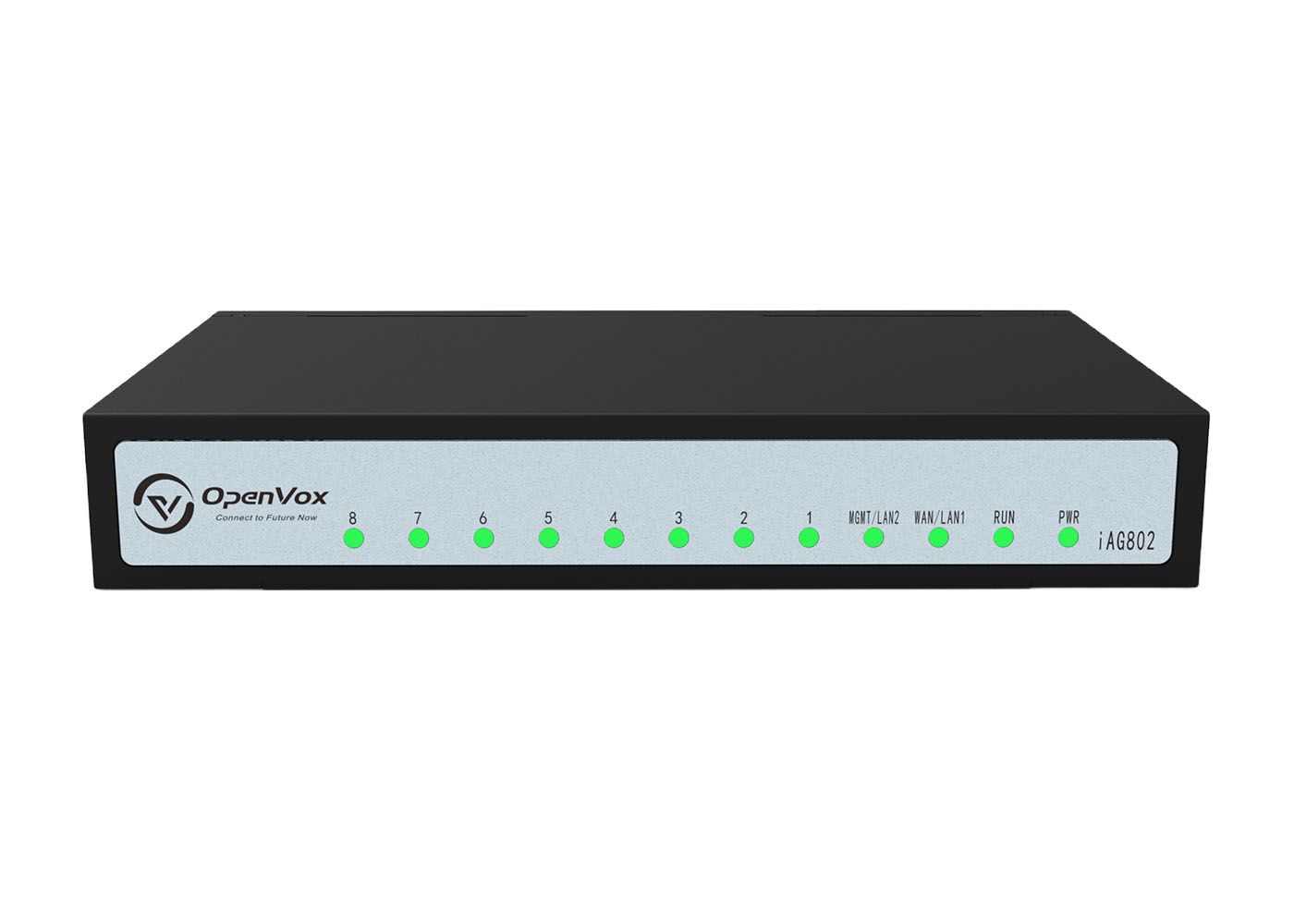
An OpenVox deployment used iAG802 gateways to connect existing office analog phones while introducing an IP calling system without large-scale rewiring.
Device type, signaling, fax behavior, and upstream system requirements are assessed before choosing the final gateway model.
Share device types, quantities, locations, wiring, fax requirements, and the target SIP or IP-PBX system. OpenVox can help map FXS capacity, validation, and cutover stages.
Supports 8 FXS ports; Supports 2 Gigabit Ethernet ports; Uses the standard SIP protocol;
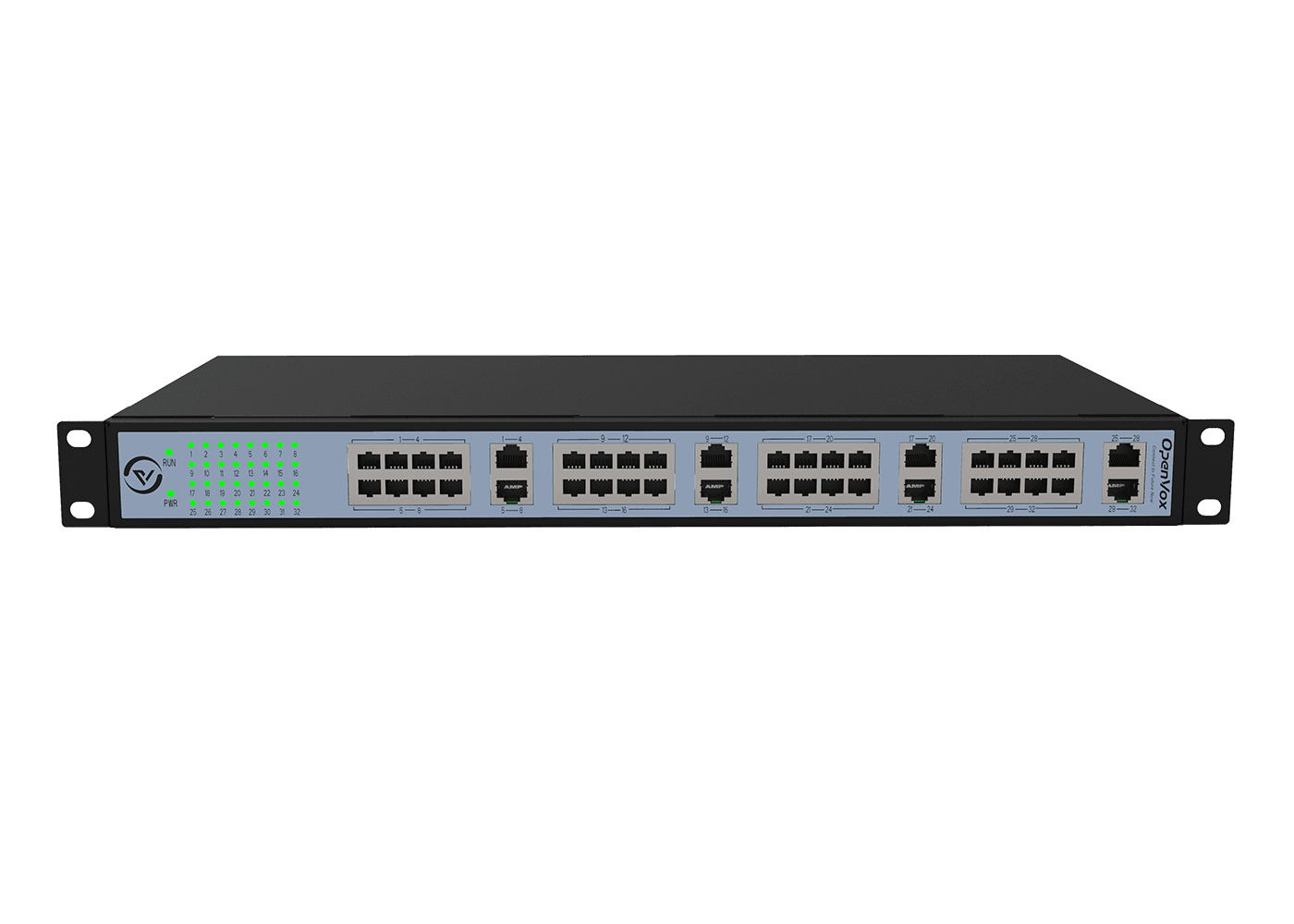
Supports 16/24/32 FXO/FXS combination ports; uses the standard SIP protocol; compatible with leading IMS/NGN platforms, IPPBX, and SIP servers.
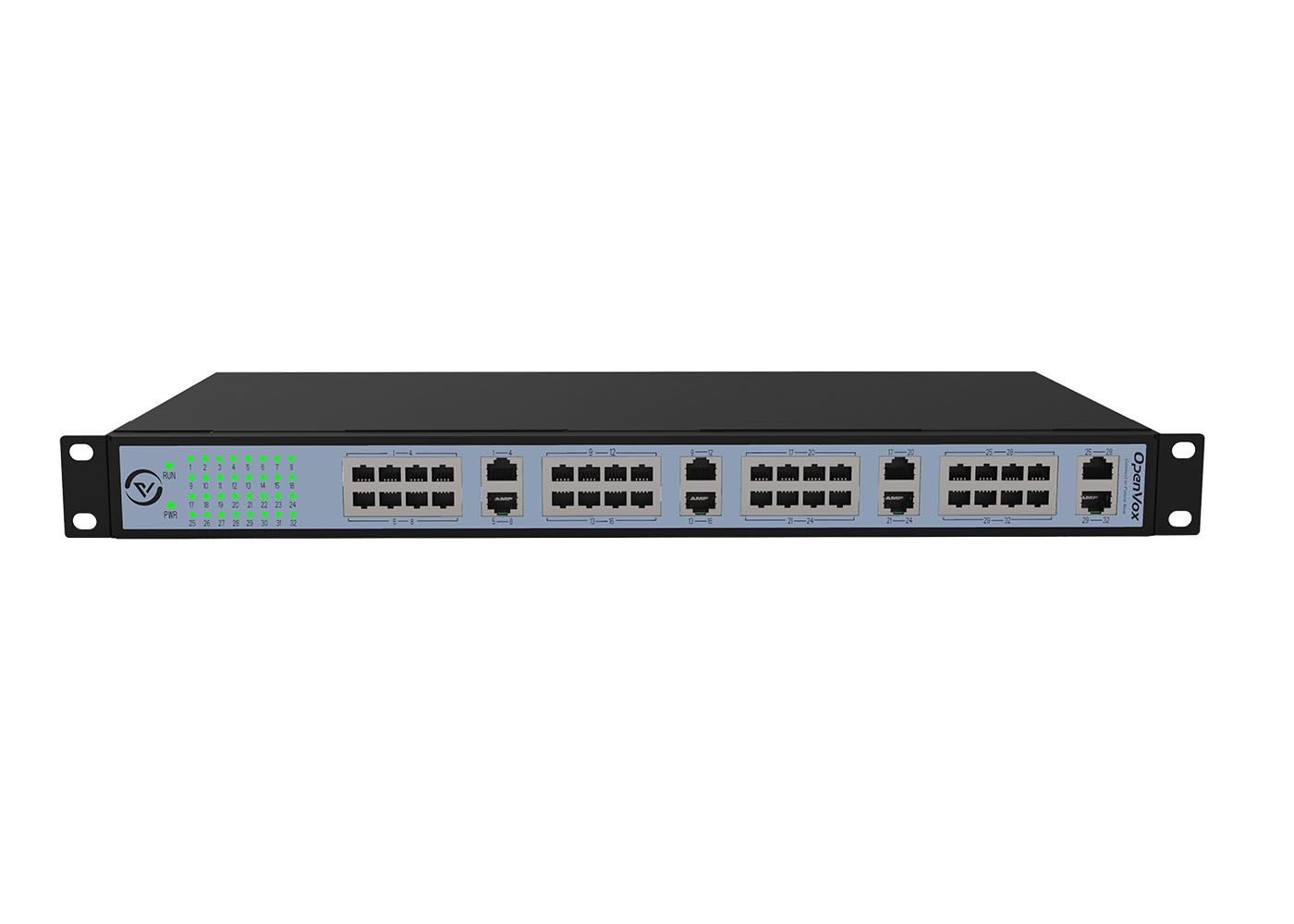
Supports 16/24/32 FXO/FXS combination ports; 4 Gigabit Ethernet ports; Uses standard SIP protocol;
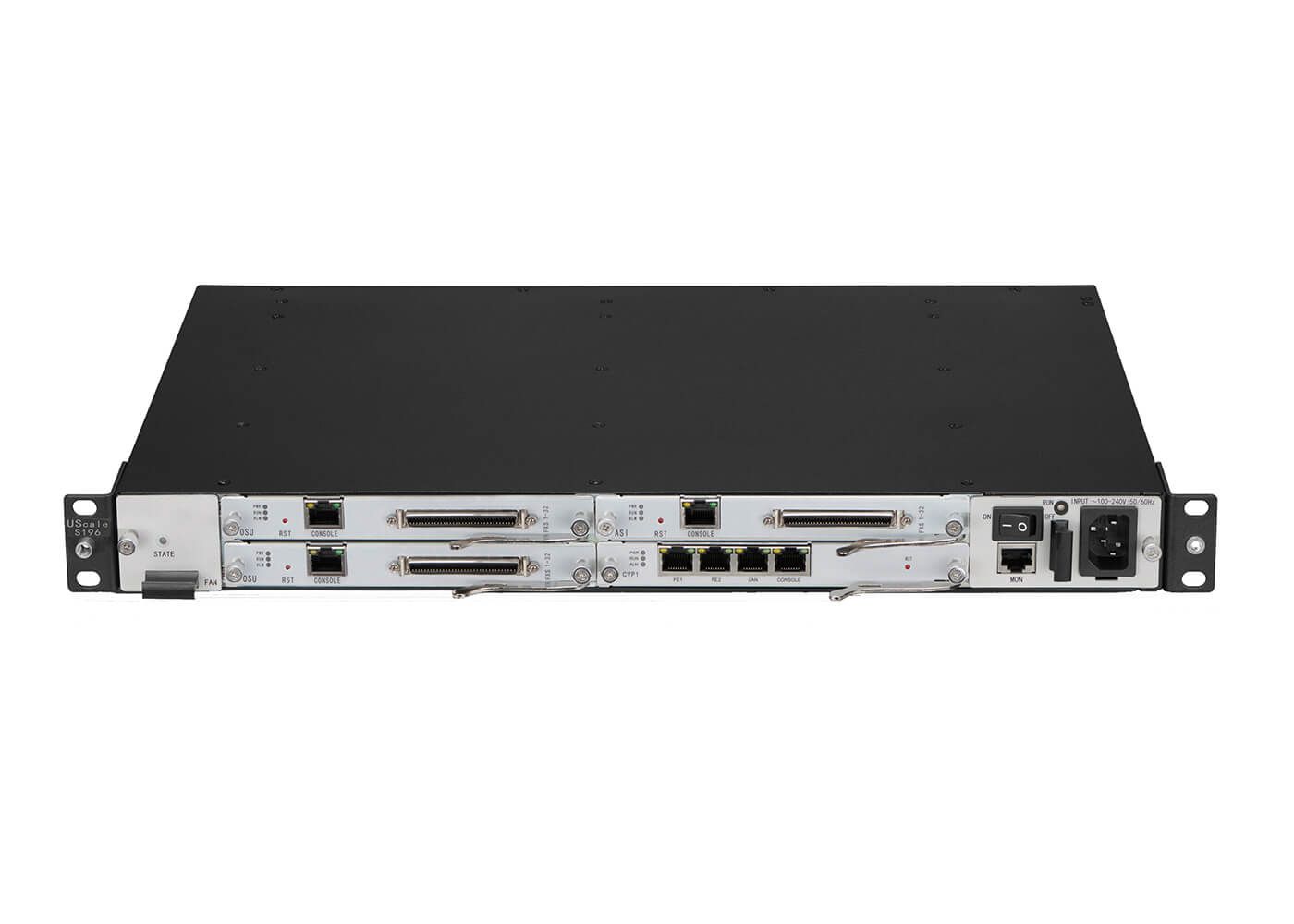
Integrated Access Device (IAD); supports 32-96 analog user channels; seamless migration from traditional analog telephones to modern IP voice networks, ensuring carrier-grade business continuity;
Describe your requirements. Our team can help you select and plan your OpenVox solution.