Unified access and call control
Host selected service modules, SIP control, and approved application roles on the central platform.
Products
Every OpenVox product line, from PBX systems to gateways and accessories.
View all 184 productsIPPBX and phones
Cards and accessories
Connect my sites
Modernize what I have
Integrate carrier access, call control, and selected voice applications in a governed SIP environment. Add each access type according to the interface, capacity, and operational ownership requirements.
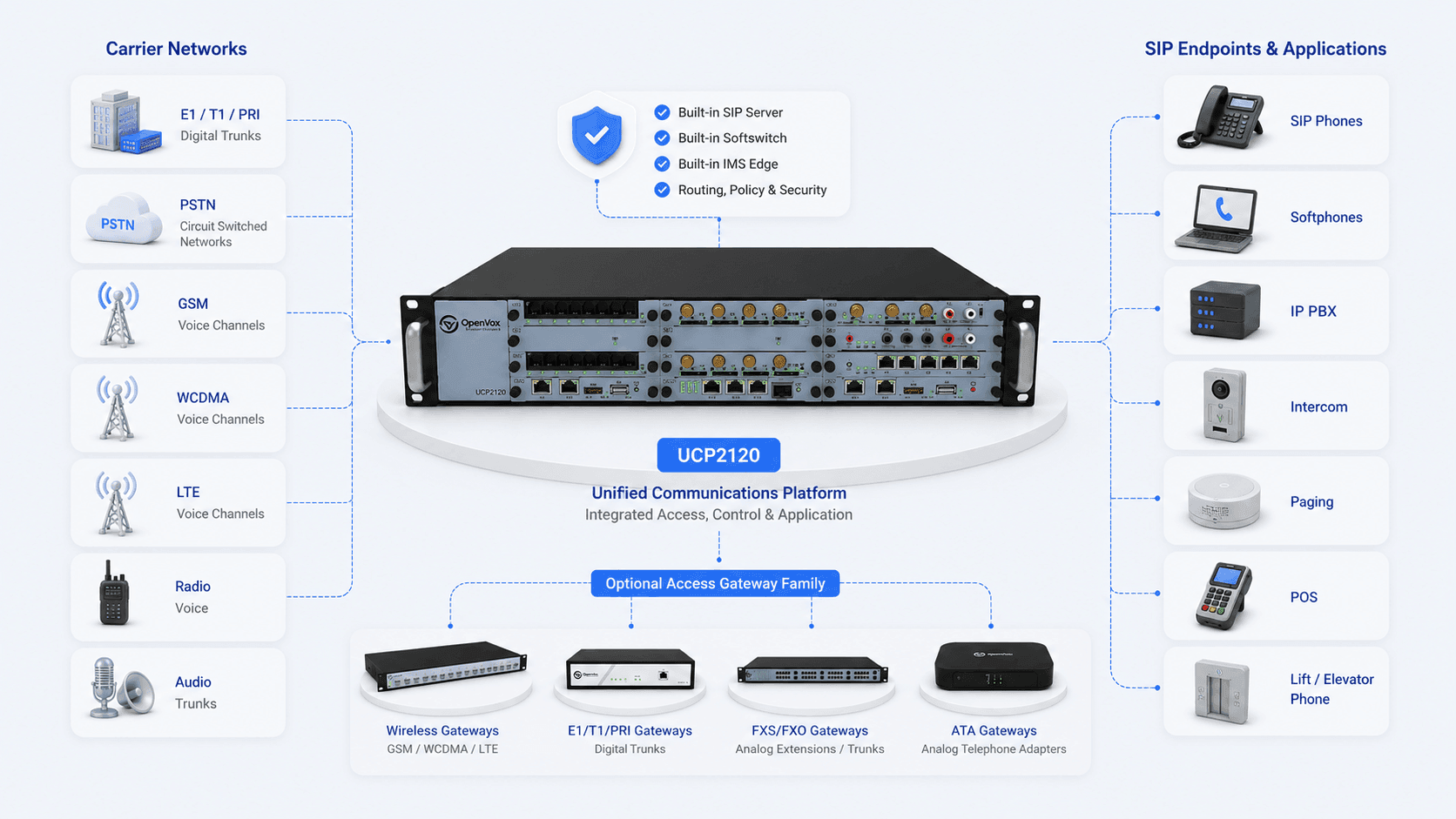
Carrier environments can combine E1/T1/PRI, PSTN, cellular, radio, or audio trunk with SIP phones, soft clients, paging, and other endpoints.
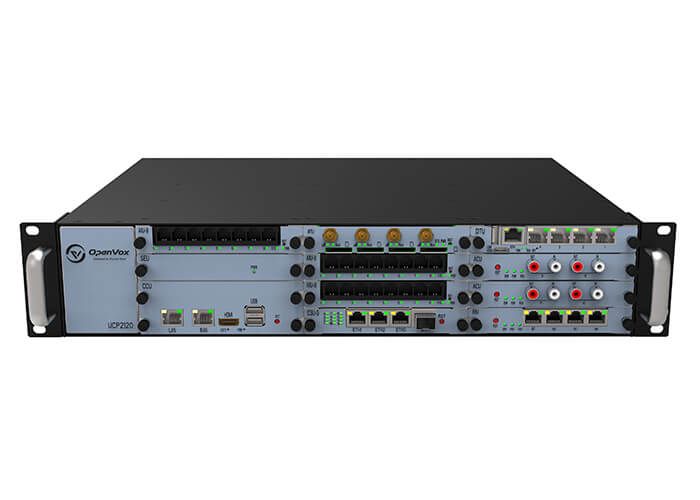
UCP2120 provides the central modular platform. External gateways extend a specific access type only when capacity, placement, or operational ownership sits outside the chassis.
Host selected service modules, SIP control, and approved application roles on the central platform.
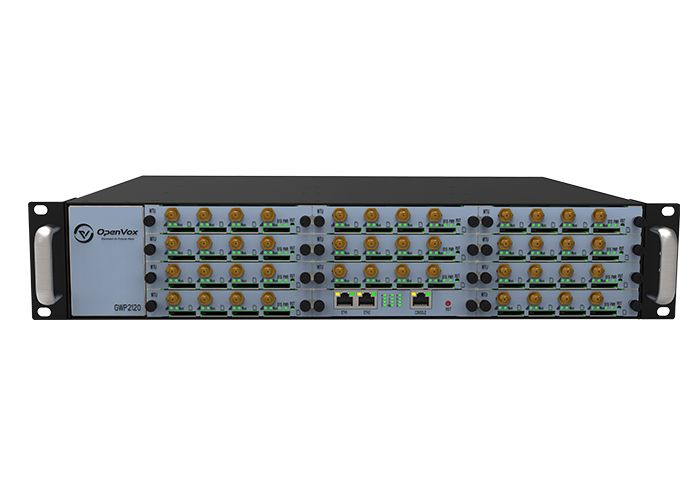
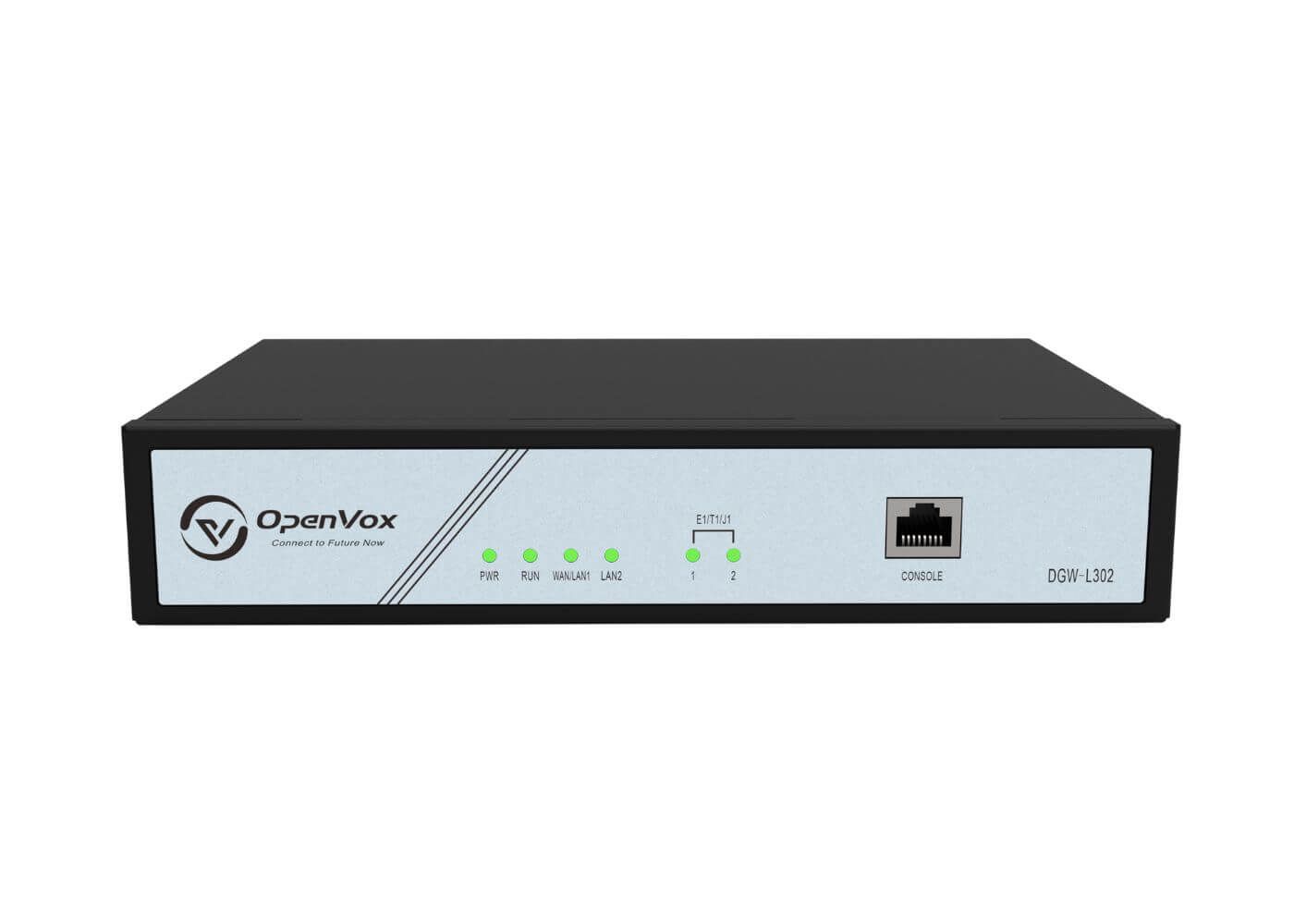
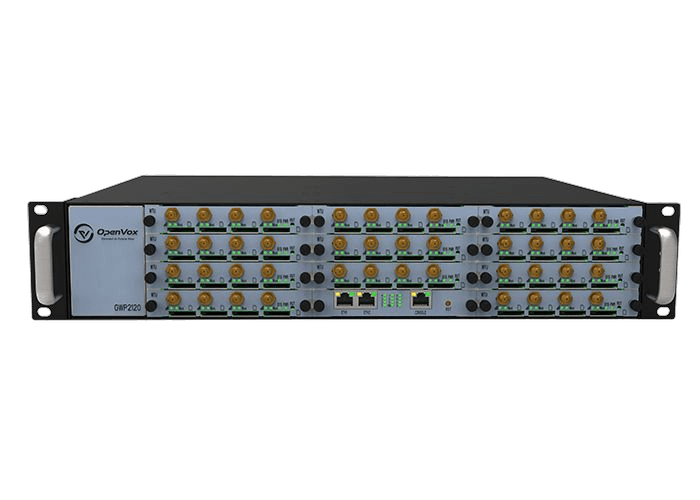
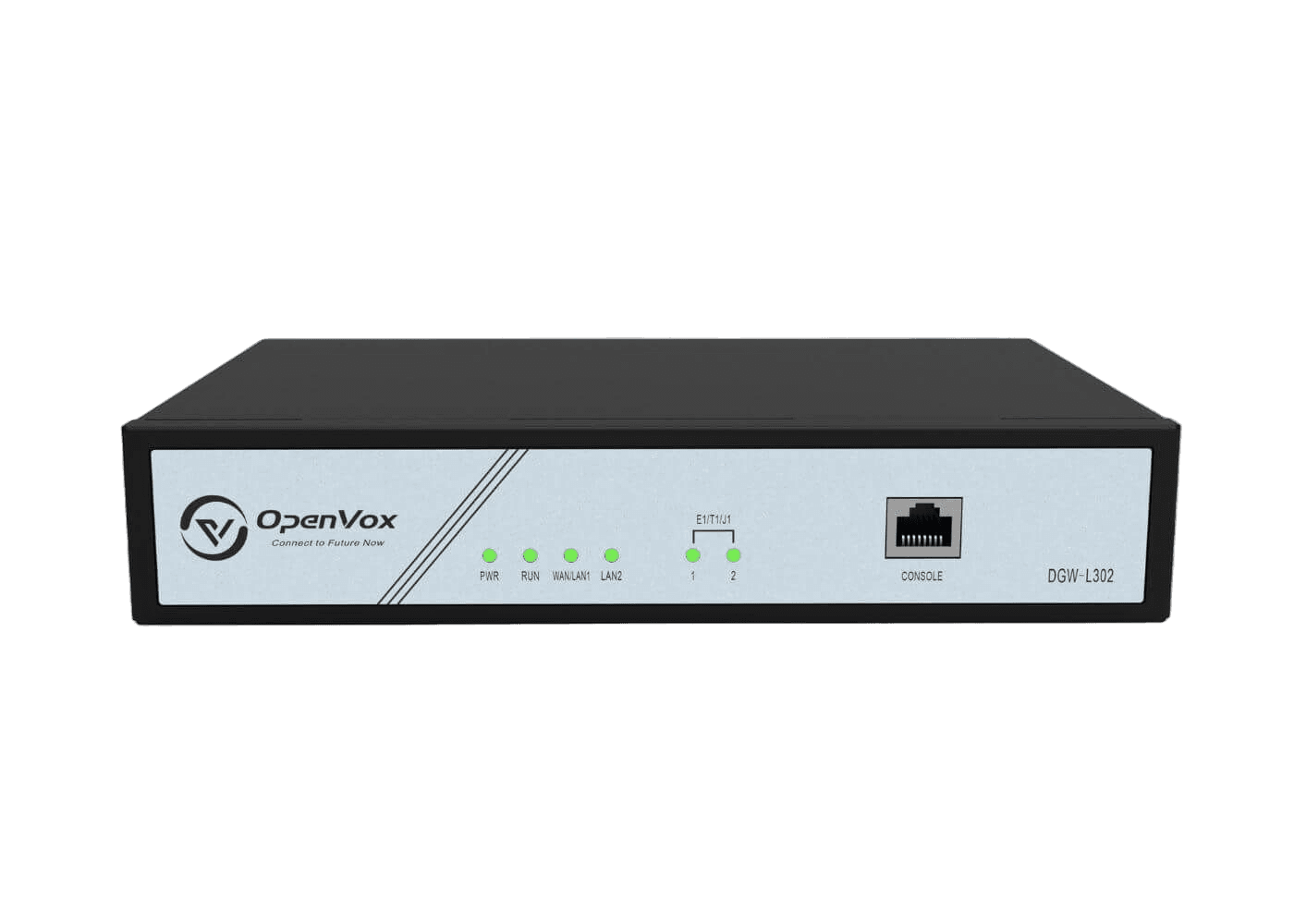
Use GWP or DGW only when cellular or E1/T1 access terminates outside the UCP2120.
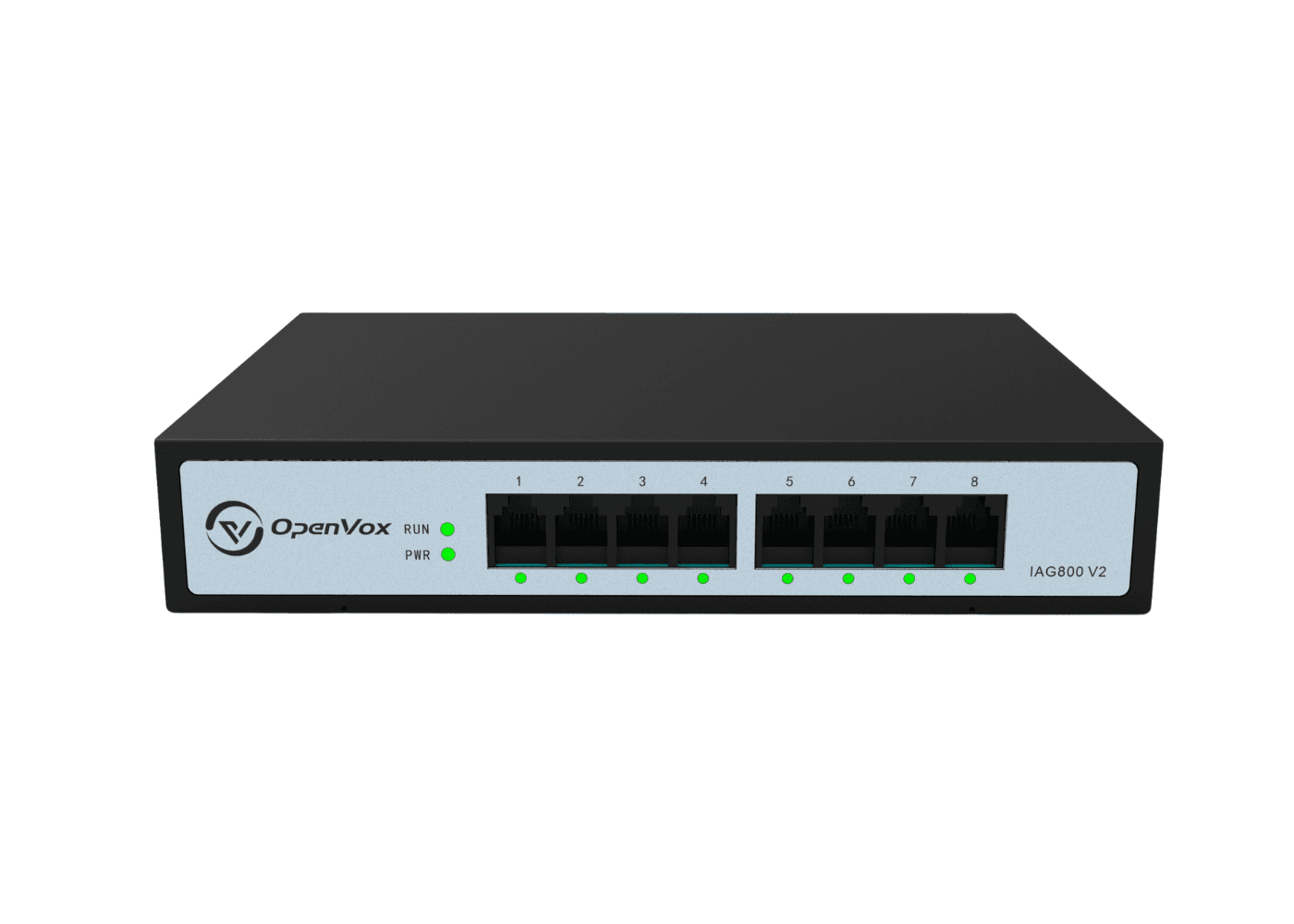
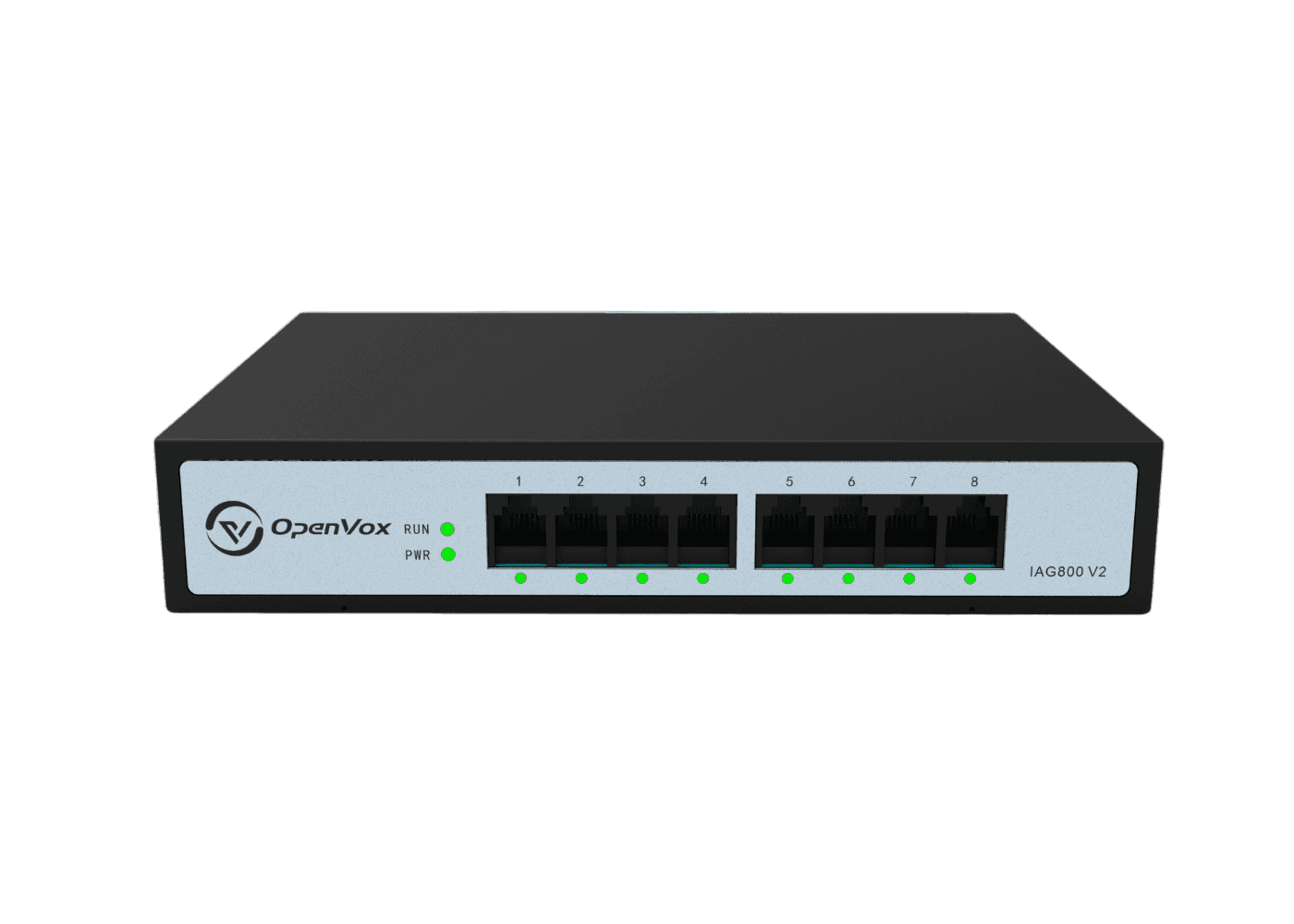
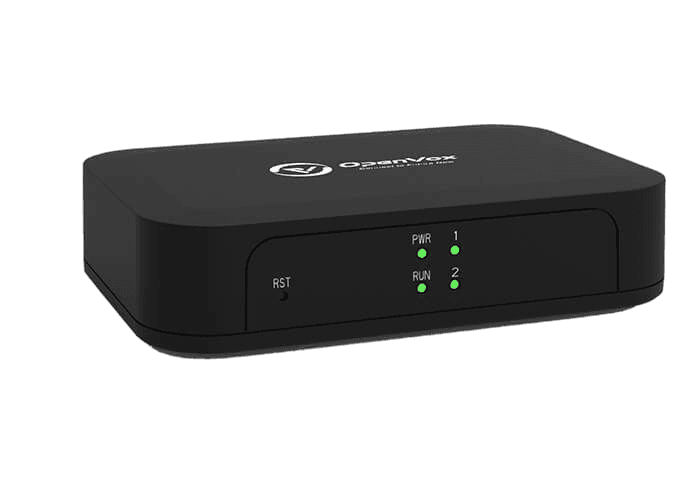
Use an iAG rack or ATA products when retained FXS or FXO endpoints require an external boundary.
Keep routing, numbering, security, and application ownership explicit for each connected endpoint.
The UCP2120 can host the call application and selected service modules, while external gateway families remain optional boundaries for digital, wireless, analog, or ATA access.
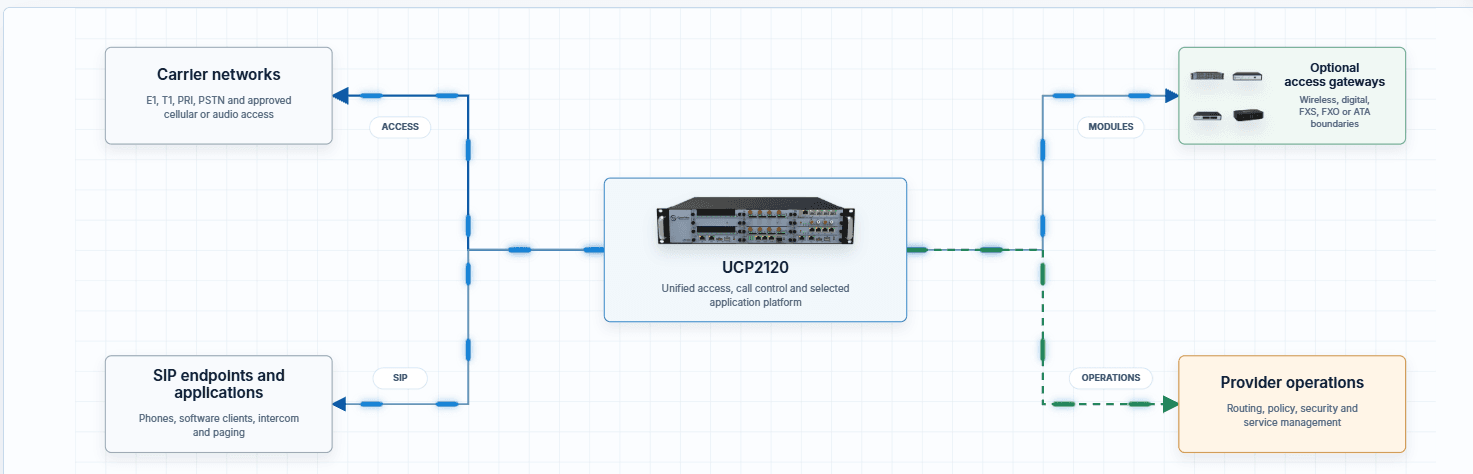
A vendor implementation must document interfaces, signaling, and capacity before gateway selection, then prove the complete call path under operating conditions.
Record digital trunks, cellular channels, analog endpoint count, sites, and ownership boundaries.
Assign DGW, SWG, and UScale IAD only where their documented interfaces match the handoff.
Document addressing, registration, routing ownership, and the softswitch or IMS relationship.
Test inbound, outbound, failover, and recovery behavior for each approved access path.
Final selection follows module capacity, signaling, cellular standard, endpoint count, placement, and applications approved for the UCP platform.
Application compatibility, carrier certification, operator approval, regional signaling, and final capacity remain project-specific validation items.
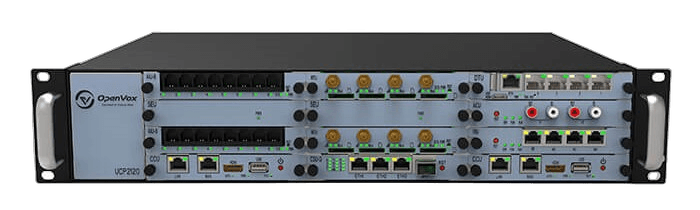
OpenVox documentation defines a 2U UCP chassis with two control card slots and configurable service modules.
UCP service modules and external gateways cover selected digital, analog, cellular, audio, and radio access roles.
The architecture connects phones, software clients, and selected applications through explicit SIP roles.
Routing, policy, security, and vendor management responsibilities remain explicit throughout the design.
Share trunk types, signaling, cellular standards, endpoint count, application requirements, and site ownership. OpenVox can help define the UCP2120 modules, optional gateways, and validation plan.
Up to 11 plug-in GSM/WCDMA/LTE modules; supports 4 to 44 channels and 2 Ethernet ports.
Supports 2 software-selectable T1/E1/PRI interfaces; supports 60 concurrent calls.
Supports 2/4/8 FXO/FXS combo ports; Uses standard SIP protocol; Compatible with leading IMS/NGN platforms, IPPBX, and SIP servers.
Describe your requirements. Our team can help you select and plan your OpenVox solution.